
 Zimbabwe’s Democracy Is Being Rewritten — And The People Are Being Written Out
Zimbabwe is not witnessing reform. It is witnessing consolidation.
The ruling party, ZANU-PF, is pushing constitutional changes that would extend presidential terms and potentially remove the people’s direct right to elect their president. These proposals are framed as structural adjustments. In reality, they strengthen executive power at a time when democratic safeguards should be reinforced. Extending presidential terms from five to seven years potentially keeping Emmerson Mnangagwa in office until 2030 weakens one of democracy’s core protections: term limits. Term limits exist to prevent power from becoming permanent. When leaders begin adjusting those limits while in office, it raises legitimate concerns about motive.
Even more alarming is the proposal to shift presidential elections from citizens to Parliament. In a legislature dominated by the ruling party, this would effectively remove millions of Zimbabweans from directly choosing their leader. A president selected by politicians instead of voters changes the very nature of accountability but constitutional amendments are only part of the concern. Critics and civil society groups have repeatedly raised questions about the independence of state institutions, particularly the judiciary. Allegations of political influence over judges and key administrative officials have persisted for years. While direct evidence is often difficult to access in a constrained environment, the perception alone damages public trust.
- When court decisions consistently align with ruling party interests in highly political cases, citizens begin to ask whether justice is truly independent or politically aligned.
- Democracy does not collapse overnight. It erodes gradually through legal amendments, institutional pressure, and the quiet weakening of oversight bodies.
- Speaking in Geneva, journalist and activist Blessed Mhlanga warned about this steady erosion of democratic space. His message was blunt: “When leaders begin to fear the ballot, they begin to change the rules.”
He added a sharper line that resonated with many in the diaspora: “A constitution must restrain power not protect it.”
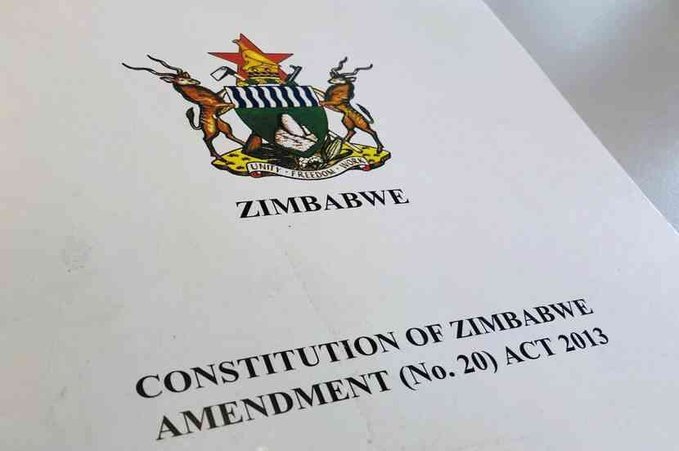
Zimbabwe’s 2013 Constitution was meant to prevent the concentration of authority that defined earlier decades. It was designed as a reset a contract between the state and its citizens. If that contract is now being adjusted in ways that disproportionately benefit those already in power, then the issue is not technical reform. It is democratic regression. The implications stretch beyond Zimbabwe’s borders. Millions in the diaspora whose remittances sustain families and institutions back home remain politically marginalised. Their financial contributions are welcomed, but their political voice remains limited.
History shows that when ruling parties reshape constitutions while questions swirl around institutional independence, confidence in governance declines both domestically and internationally.
The question Zimbabwe now faces is simple:
Is the constitution being strengthened for future generations or reshaped for present leadership?
Because when institutions appear compromised, and when electoral power shifts away from the people, democracy stops being a system of accountability.
It becomes a system of control.