
Home
Justice for the People of Zimbabwe
- Details
- Written by: Brian Murenza
- Category: Corruption News
- Hits: 76
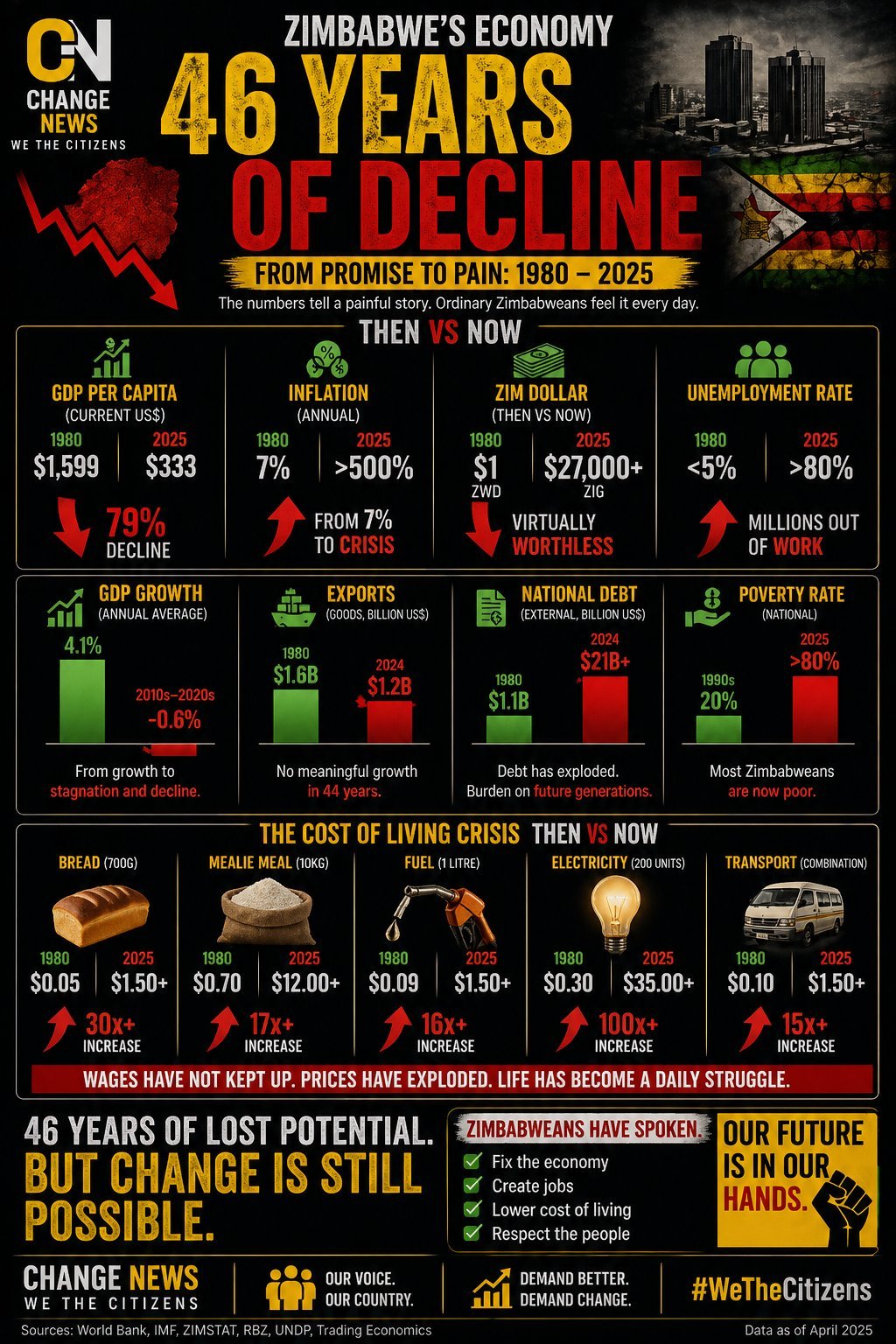 JUSTICE FOR THE PEOPLE OF ZIMBABWE:
ACCOUNTABILITY, HUMAN RIGHTS AND DIGNITY
We call upon the Government of Zimbabwe, the City of Harare, and relevant international authorities to take urgent action to address the suffering of ordinary Zimbabwean citizens.
1. Accountability for alleged corruption
We call for transparent, independent investigations into allegations of corruption, irregular government contracts, and the possible misuse of public funds. No individual should be above the law, regardless of wealth, political connections, or public status.
2. Protection of citizens' homes
We are deeply concerned about the demolition of homes in Harare and the devastating consequences for families who lose their shelter and livelihoods. We call for lawful procedures, due process, adequate notice, and appropriate remedies for affected residents.
3. Healthcare and access to essential medicines
Zimbabweans deserve access to hospitals with essential medicines, trained medical professionals, and functioning equipment. We urge the government to address medicine shortages and improve emergency medical services so that preventable deaths can be avoided.
4. Safer roads and protection of human life
Poor road conditions, dangerous potholes, inadequate lighting, and neglected infrastructure put lives at risk. We demand urgent road repairs, proper maintenance, and transparent use of public infrastructure funds.
5. Accountability during visits to the United Kingdom
If the Mayor of Harare intends to visit the UK, we call on the relevant British authorities to consider any credible, documented evidence of serious wrongdoing through the appropriate legal and immigration procedures. Any decision must follow UK law and respect due process.
**OUR MESSAGE IS CLEAR: THE PEOPLE OF ZIMBABWE DESERVE JUSTICE, SAFE HOMES, ACCESS TO MEDICINES, SAFE ROADS, AND LEADERS WHO ARE ACCOUNTABLE TO THE PUBLIC.
We call for peaceful action, independent investigations, transparency, and justice for all Zimbabweans. Human dignity and the rule of law must come first.
Zimbabweans Must Not Be Forgotten
- Details
- Written by: Munyaradzi Masaka
- Category: Corruption News
- Hits: 123
Zimbabweans Must Not Be Forgotten
Zimbabwe’s decision to donate food supplies to communities in drought-affected Botswana has raised an important question about the country’s own food-security situation: while Zimbabwe is extending a helping hand to its neighbour, are enough
Zimbabweans receiving the help they need at home?
In September 2026, Zimbabwe donated 10 tonnes of food supplies to communities in Botswana’s drought-prone Bobirwa District through ZimAid, the country’s foreign-assistance programme. The gesture demonstrates regional solidarity between neighbouring countries.
However, the government must also confront the reality facing vulnerable Zimbabweans.
The World Food Programme’s 2026 assessment says 35% of Zimbabwe’s urban population is food insecure, while 57% of rural households experience food insecurity during the lean season. WFP also reports that high food prices, limited employment opportunities and economic pressures continue to restrict many households’ ability to obtain adequate food.
FEWS NET has similarly warned that food insecurity could deteriorate through early 2027, with some of the worst-affected areas potentially reaching Crisis (IPC Phase 3) conditions as households exhaust their own food stocks and face high staple prices and reduced incomes.
These figures should not be ignored.
There is nothing inherently wrong with Zimbabwe helping a neighbouring country facing drought. African countries have historically supported one another during difficult times, and humanitarian solidarity is important.
But charity beyond our borders should not distract from responsibility at home.
When families struggle to put sufficient food on the table, when unemployment limits people's ability to buy basic necessities, and when rural households face declining food stocks, government policy must ensure that vulnerable citizens are adequately protected.
The central question is therefore not simply, “Why did Zimbabwe give food to Botswana?” The more important question is: “What is Zimbabwe doing to make sure that no Zimbabwean family is left without sufficient food?”
A government is ultimately accountable for the welfare of the people it governs. Assistance to neighbours can coexist with domestic support, but Zimbabweans have a legitimate right to ask whether resources, policies and social-protection programmes are reaching those who need them most.
Zimbabwe should be able to lend a helping hand to its neighbours without leaving its own vulnerable citizens behind.
The country’s food-security figures provide an opportunity for government to reassess its priorities, strengthen social protection, address unemployment and improve household purchasing power.
The people of Zimbabwe deserve not only promises of a better future, but practical policies that ensure that food, dignity and opportunity are available to them today.
Zimbabwe Belongs to Its People
- Details
- Written by: Andrew Tinashe MASUKA
- Category: Diaspora
- Hits: 223
 Zimbabwe Belongs to Its People: Why Democracy, Accountability and Change Matter
Zimbabwe is a country with enormous potential. It has fertile land, valuable minerals, talented people and a population that has repeatedly demonstrated resilience in the face of economic and political hardship. Yet, for millions of Zimbabweans, the promise of a better future remains unfulfilled.
For decades, ZANU-PF has dominated Zimbabwean politics. The party has governed the country since independence in 1980. The question Zimbabweans must now ask is not simply who has governed the country for the longest, but whether the political system is genuinely giving citizens a meaningful opportunity to choose the government they want. Democracy cannot simply mean holding an election every few years. Democracy must mean that citizens are free to organise, campaign, criticise those in power and ultimately remove a government through a credible and peaceful vote.
The 2030 Question
The controversy surrounding President Emmerson Mnangagwa’s extension to 2030 has intensified this debate. In July 2026, Mnangagwa signed constitutional amendments that postponed the next presidential election and extended his tenure to 2030. The amendments also removed the direct election of the president by citizens, giving Parliament the responsibility of choosing the president. Critics have argued that these changes weaken the principle that Zimbabweans should directly choose their national leader. (AP News)
This should concern every Zimbabwean, regardless of political affiliation.
A president should not remain in office simply because the political system has been changed to make it possible. The people should have the final say. If a government genuinely believes it has delivered for the people, why should it fear giving citizens the opportunity to decide whether it deserves another mandate? Where Are the Resources Going?
Zimbabwe’s Road Carnage
- Details
- Written by: Munyaradzi Masaka
- Category: Zimbabwe
- Hits: 173
 Zimbabwe’s Road Carnage: A Government Failing Its People
Zimbabweans are once again mourning loved ones killed in road traffic accidents. In recent weeks, a series of devastating crashes has claimed lives, left scores injured and raised serious questions about the state of the country's transport system and the government's commitment to protecting its citizens. The latest tragedy involving supporters of Highlanders Football Club near Mbalabala has added to a growing sense of national grief. Reports indicate that six people died while four others sustained serious injuries after a road accident as supporters travelled home following a football match. And the 4 ZNA soldiers killed as reported on 9th August 2026 {See Here}
This tragedy did not happen in isolation.
Earlier this month, reports emerged of another deadly collision involving two ZUPCO buses on the Harare-Chirundu Road, reportedly leaving seven people dead and dozens injured. These incidents should not simply be treated as unfortunate accidents that happen from time to time. They should force the government to confront a much deeper problem: Zimbabwe's transport and road-safety system is failing its people. The government itself has acknowledged the scale of the crisis. Transport authorities have previously stated that Zimbabwe records tens of thousands of road traffic accidents every year, with thousands of people injured and hundreds of millions of US dollars lost annually as a result of crashes. The government has also acknowledged the deteriorating condition of the country's roads.
Where is the accountability?
When citizens are killed on poorly maintained roads, when public transport vehicles
Gwayi-Shangani Dam
- Details
- Written by: J C Burke
- Category: Zimbabwe
- Hits: 533
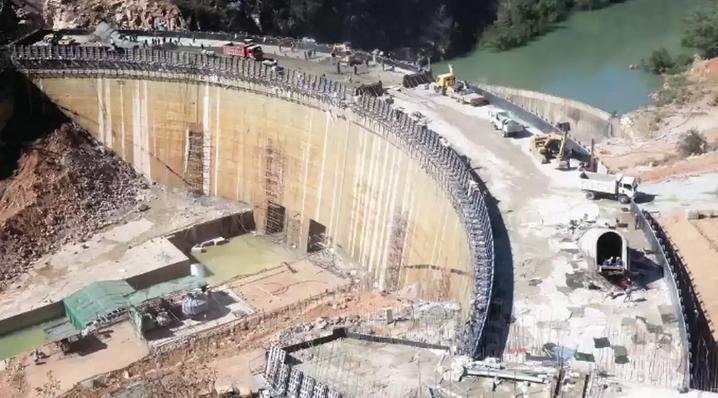 David Coltart asked a perfect reasonable question {but "fully loaded"} [twitter] regarding this project: "When will it be finished"? which led to many questions - and ultimately led to this detailed analysis and report
We asked: Given our experience with Civil Engineering Projects can you research: Gwayi-Shangani Dam project - Zimbabwe
- With reference to the 1912 concept
- With when physical works were started and relevant details
- History of delays, mistakes, collapse and contractors involved since physical works began
- Any history/evidence of Zanu PF corruption or any kind of interference?
- Recent propaganda claims by the regime or ongoing claims over the decades?
This is a rich and well-documented topic. Let me now compile a comprehensive, structured analysis for you.
Gwayi-Shangani Dam — A Comprehensive Analysis
1. The 1912 Concept & Origins
The idea for the construction of a major dam for the continually drought-stricken Matabeleland Region was first mooted in the early 1900s. An estimate of the cost of such a construction in 1912 was £6,000.
In response to the bedevilling water shortages, the National Matabeleland Zambezi Water Project (NMZWP) was conceived in 1912, encompassing a dam and a pipeline. However, the project remained dormant under settler administration.
The concept was straightforward in engineering terms: the confluence of the Gwayi and Shangani rivers, approximately 6km downstream, offered a natural gorge suited for dam construction. The dam was planned with a holding capacity of 650 million cubic metres, as part of the NMZWP, which aimed to eventually pipe water from the Zambezi River to Bulawayo.
Page 1 of 18