
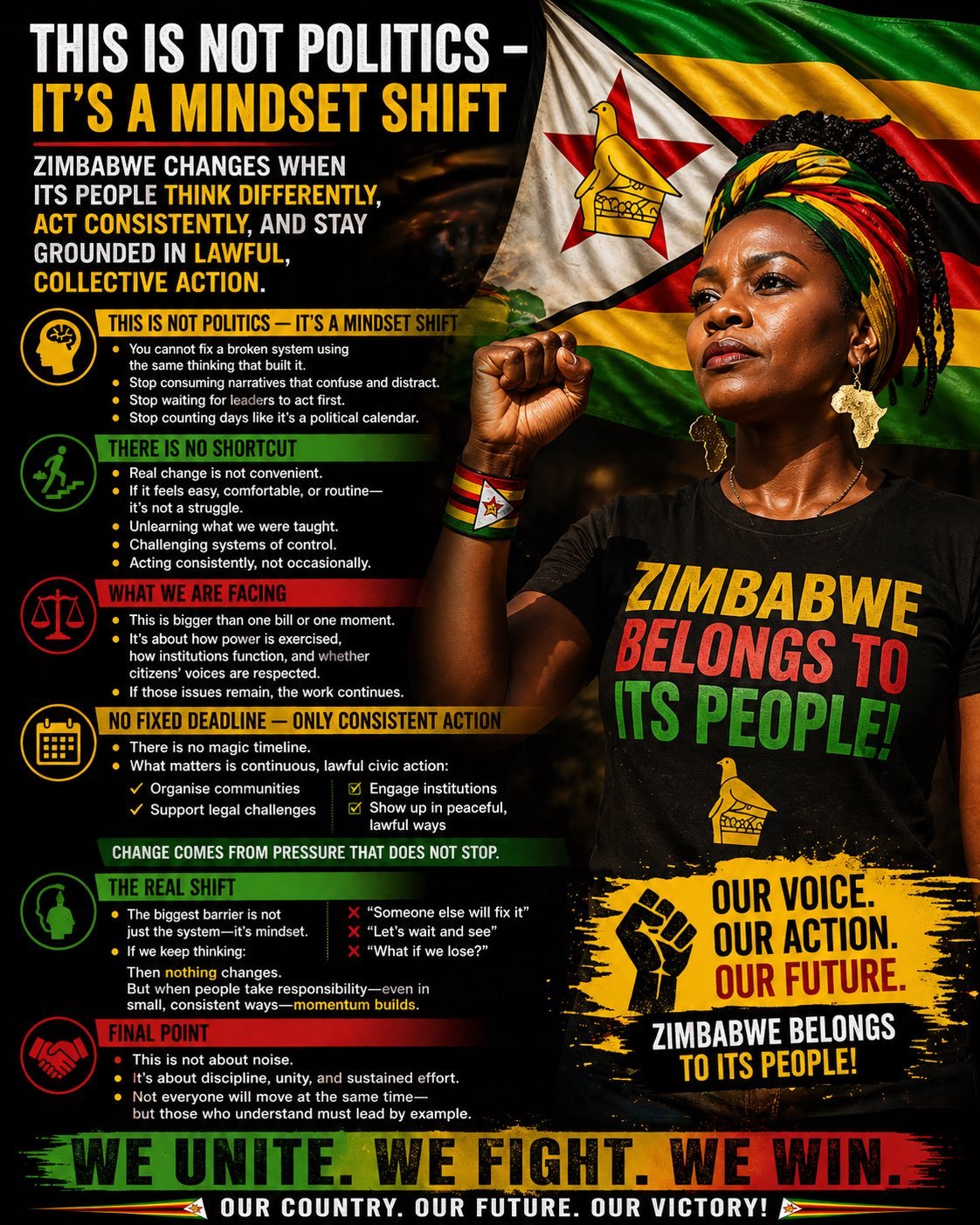
 The Erosion of Rights in Zimbabwe and the Voice of the Diaspora
When Zimbabwe gained independence in 1980, it carried the hopes of a nation emerging from colonial rule hopes anchored in freedom, equality and democratic governance. For many, independence symbolised not only political sovereignty but the promise of a society grounded in justice, accountability and respect for human rights. More than four decades later, however, questions persist about whether that promise has been fully realised.
Over the years, concerns have grown over the centralisation of state power and the weakening of key democratic institutions. Bodies expected to act as safeguards such as the judiciary, security services and electoral systems have at times faced scrutiny regarding their independence. At the same time, opposition figures, journalists and civil society organisations have reported increasing pressure, contributing to a climate where the exercise of constitutional rights can feel uncertain.
The adoption of the 2013 Constitution was widely viewed as a milestone, offering renewed hope for democratic reform. It introduced stronger protections for fundamental freedoms and aimed to reinforce the rule of law. Yet implementation has been uneven, and the gap between constitutional guarantees and lived realities remains a defining challenge for many Zimbabweans.
A central issue in this debate is the repeated amendment of the Constitution. While constitutional reform is not unusual in democratic systems, critics argue that frequent changes particularly those lacking broad public consensus risk undermining the stability of the legal framework. A constitution is intended to serve as a durable safeguard of citizens’ rights; when it becomes subject to regular alteration, public trust in its protective role may diminish.
Equally concerning is the question of personal liberty, particularly access to bail. In principle, bail exists to uphold the presumption of innocence and to prevent unnecessary pre-trial detention. However, there have been growing concerns that bail processes in Zimbabwe have not always been applied consistently, especially in cases involving political actors or government critics. Where access to bail is restricted or delayed, it raises broader questions about fairness, due process and the independence of the justice system.
Taken together, these developments point to a gradual narrowing of civic space. Citizens may become hesitant to express dissenting views or to engage fully in political life, not necessarily because rights have been formally withdrawn, but because their practical enjoyment appears uncertain. In such an environment, the erosion of rights can occur subtly, through legal shifts, selective enforcement and the quiet spread of fear.
It is within this context that the Zimbabwean diaspora has emerged as an increasingly important voice in the call for reform. Zimbabweans living abroad continue to engage in advocacy efforts aimed at promoting accountability, democratic governance and respect for human rights.
On 21 April 2026, a coalition of diaspora activists is set to deliver a petition to the Foreign, Commonwealth & Development Office in London. Organised under the banner of the Zimbabwe Human Rights Organisation, the petition seeks to highlight ongoing concerns about the erosion of rights affecting Zimbabweans, both within the country and across the diaspora. 16 petitions have been handed down to various institutions and have served as a stark reminder that ZHRO is an effective human rights watch group with interest on observing Zimbabwean rights and freedoms. These petitions are easily accessible through this link 16 Events Not Out
The significance of this action lies not only in its message but in its method. It represents a peaceful and structured appeal to the international community, demonstrating a commitment to democratic engagement and lawful advocacy. By presenting their concerns to the UK government, organisers hope to draw attention to issues of governance, the rule of law and the protection of fundamental freedoms.
International pressure has historically played an important role in raising awareness of governance and human rights concerns around the world. Petitions such as this one can help place Zimbabwe’s constitutional and democratic challenges back onto diplomatic agendas, encouraging discussion among policymakers, parliamentarians and international institutions. They also serve as a reminder that developments inside Zimbabwe continue to resonate beyond its borders, particularly among citizens living abroad.
Among the issues likely to attract concern is the proposed Constitutional Amendment Bill No. 3, which critics argue could further weaken democratic safeguards and consolidate executive authority. Diaspora campaigners hope that by raising the matter with British officials and parliamentarians, there may be increased scrutiny through democratic channels, including parliamentary committees and foreign affairs forums. Some activists have called for Zimbabwe’s ambassador to be invited before relevant parliamentary bodies or select committees to explain the government’s position on constitutional reforms and respond to wider concerns about governance and civil liberties.
For participants, the petition is more than a symbolic gesture. It is an assertion of agency—a reminder that citizenship extends beyond borders and that the diaspora remains an integral part of Zimbabwe’s political and social fabric. Through such efforts, Zimbabweans abroad continue to contribute to national discourse, advocating for a future defined by accountability and respect for constitutional principles.
Ultimately, the story of Zimbabwe’s independence is still being written. While the foundations were laid in 1980, the realisation of a fully democratic society requires ongoing vigilance and participation. As this latest initiative demonstrates, Zimbabweans both at home and abroad remain engaged in that process, determined to ensure that the ideals of independence are not only remembered, but meaningfully upheld.